
Modern farming goes far beyond manual labor and traditional methods. Today’s farmers face rising input costs, unpredictable weather, changing market conditions, and growing pressure to use resources responsibly. To remain productive and competitive, many are adopting technologies and management practices that help them work more efficiently, reduce waste, and make better decisions.
From precision agriculture and drone monitoring to improved soil management and workforce training, these approaches can help farmers streamline daily operations and build more resilient businesses. The best solutions depend on the farm’s size, budget, location, crops, livestock, and production goals.
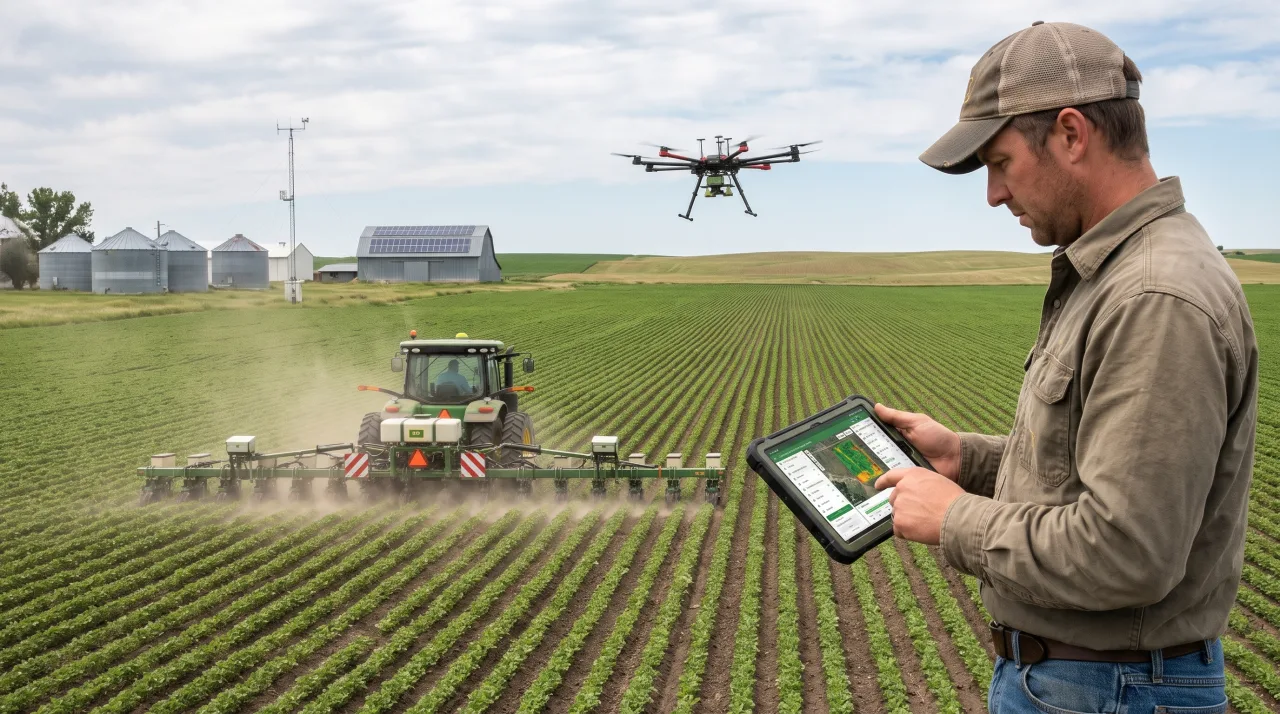
At a Glance: 10 Ways to Improve Farm Efficiency
| Efficiency Method | Technology or Practice | Potential Benefit |
|---|---|---|
| 1. Precision Agriculture | GPS guidance, soil mapping, variable-rate technology | Improves the accuracy of field operations and input application |
| 2. Drone Monitoring | Aerial imaging and crop mapping | Helps identify areas that may require closer inspection |
| 3. Efficient Irrigation | Soil moisture sensors, weather data, drip irrigation | Helps manage water use and reduce unnecessary irrigation |
| 4. Livestock Monitoring | Smart collars, electronic ear tags, activity sensors | Helps identify changes in animal behavior and possible health concerns |
| 5. Soil Health Management | Soil testing, cover crops, crop rotation | Supports soil fertility, water management, and erosion control |
| 6. Farm Management Software | Digital records, inventory tracking, planning tools | Organizes operational, financial, and production information |
| 7. Integrated Pest Management | Pest monitoring, biological controls, crop rotation | Helps manage pests while reducing unnecessary pesticide applications |
| 8. Renewable Energy | Solar power, wind energy, biogas systems | May reduce energy costs and dependence on conventional power sources |
| 9. Revenue Diversification | Direct sales, agritourism, value-added products | Creates additional income opportunities |
| 10. Workforce Training | Equipment instruction, digital skills, safety training | Improves work quality, safety, and equipment utilization |
1. Adopt Precision Agriculture Technology
Precision agriculture uses technologies such as GPS guidance, field mapping, sensors, and data analysis to help farmers make more informed decisions about field operations.
-
Variable-rate technology: Compatible equipment can adjust the application rate of seeds, fertilizers, or certain crop protection products according to field conditions and a prescription map.
-
More targeted field operations: Soil tests, yield maps, and field observations help farmers identify differences within a field and apply inputs where they are most needed.
-
Improved operational accuracy: GPS guidance can help reduce overlapping passes, improve consistency, and make fieldwork more efficient.
These technologies can help reduce input waste and improve productivity when properly configured. However, the benefits depend on accurate data, suitable equipment, and effective implementation. Farmers should compare the investment and operating costs with the potential savings before adopting advanced systems.
2. Use Drones for Crop Monitoring
Drones provide an aerial view of fields, allowing farmers to inspect large areas more quickly than walking every section on foot. They can be especially useful for identifying locations that need further investigation.
-
Aerial crop assessment: Standard cameras can reveal visible differences in crop growth, plant coverage, and field conditions.
-
Multispectral imaging: Specialized sensors can measure reflected light at different wavelengths and generate vegetation indices, including the Normalized Difference Vegetation Index (NDVI). These measurements can help highlight areas of unusual crop growth.
-
Targeted field inspections: Drone imagery can help farmers prioritize ground checks for possible irrigation problems, nutrient deficiencies, disease, or pest damage.
Drone imagery does not automatically identify the cause of crop stress. Similar patterns may result from several different problems, so farmers should confirm findings through field inspections, soil testing, or advice from qualified agricultural specialists.
Before operating a drone, check applicable aviation rules, privacy requirements, and restrictions on agricultural spraying in the relevant jurisdiction.
3. Improve Irrigation Efficiency
Water management is essential for maintaining healthy crops, controlling production costs, and responding to periods of limited rainfall. Efficient irrigation helps farmers supply water according to crop requirements and local conditions.
-
Soil moisture monitoring: Sensors can provide information about water levels in the soil, helping farmers decide when irrigation may be necessary.
-
Weather-informed scheduling: Rainfall forecasts, temperature, humidity, and crop growth stages can help guide irrigation decisions.
-
Efficient delivery systems: Drip irrigation delivers water near plant roots, while well-managed sprinkler and center-pivot systems can distribute water across larger fields.
The most suitable irrigation method depends on the crop, soil type, terrain, climate, water availability, and installation cost. Proper maintenance is also important: leaking pipes, blocked emitters, poor sprinkler alignment, and incorrect scheduling can reduce efficiency even in advanced systems.
By combining field observations with suitable monitoring tools, farmers can reduce unnecessary water use and improve irrigation planning.
4. Monitor Livestock with Smart Technology
Digital livestock monitoring tools can help farmers observe animal activity and identify changes that may require attention. Depending on the system, devices may track location, movement, rumination, temperature, or other indicators.
-
Activity monitoring: Smart collars and electronic tags can identify changes in movement or feeding patterns that may warrant closer observation.
-
Reproductive management: Some systems analyze activity patterns to help detect possible signs of heat and improve breeding schedules.
-
Early identification of concerns: Changes in recorded behavior may alert farmers to possible illness, injury, or stress before a problem becomes more obvious.
These systems can improve monitoring efficiency, particularly on larger farms. However, alerts are indicators rather than diagnoses. Farmers should investigate unusual readings and consult a veterinarian when necessary.
When choosing livestock monitoring technology, consider battery life, device durability, connectivity, animal comfort, data accuracy, and the cost of maintaining the system.
5. Improve Soil Health and Conservation
Healthy soil supports crop growth, stores water, cycles nutrients, and provides a foundation for long-term agricultural productivity. Soil management practices can help farmers maintain these functions while reducing erosion and unnecessary input use.
-
Regular soil testing: Testing helps identify nutrient deficiencies, pH imbalances, and other conditions that affect crop growth. Results can guide fertilizer and soil amendment decisions.
-
Cover cropping: Cover crops protect exposed soil between production cycles, help reduce erosion, and can contribute organic matter. Certain species may also support nitrogen management.
-
Crop rotation: Rotating crops with different nutrient requirements and pest relationships can help diversify production and disrupt some pest and disease cycles.
-
Reduced or no-till practices: Limiting soil disturbance can reduce erosion and support soil structure in suitable conditions, although results vary with soil type, climate, weed pressure, and management.
These practices may improve soil function over time, but they are not one-size-fits-all solutions. Farmers should choose methods suited to their local conditions and monitor results over multiple growing seasons.
6. Use Farm Management Software
Running a farm involves coordinating planting schedules, labor, equipment, inventory, expenses, sales, and production records. Farm management software can bring many of these activities into one digital system.
-
Centralized records: Digital platforms can organize field histories, input applications, equipment maintenance, inventory, and financial information.
-
Planning and budgeting: Farmers can use recorded expenses and production data to estimate costs, plan purchases, and evaluate the performance of different crops or enterprises.
-
Improved coordination: Shared records can help farm owners, managers, and employees communicate about schedules, tasks, and operational priorities.
-
Historical comparisons: Comparing records across seasons can help identify recurring problems and assess whether changes in management are delivering the expected results.
Software is most useful when records are accurate, consistently updated, and relevant to the decisions farmers need to make. Before choosing a platform, compare subscription fees, ease of use, offline functionality, data export options, privacy protections, and compatibility with existing equipment.
Smaller farms may find that a spreadsheet or simple recordkeeping application meets their needs without the expense of a comprehensive management platform.
7. Apply Integrated Pest Management
Integrated Pest Management (IPM) combines monitoring, prevention, and targeted control to manage pests while minimizing unnecessary environmental and economic costs.
-
Routine monitoring: Regular scouting and pest identification help farmers determine whether a problem is developing and whether action is necessary.
-
Preventive practices: Crop rotation, resistant varieties, sanitation, and appropriate planting schedules can reduce the likelihood or severity of certain pest problems.
-
Biological control: Beneficial insects and other natural enemies can help suppress some pest populations when the conditions are appropriate.
-
Targeted interventions: When monitoring indicates that control is necessary, farmers can select suitable methods, including approved pesticides, and apply them according to label directions.
IPM does not mean that chemical pesticides are always a last resort or that they should never be used. Instead, it emphasizes selecting effective control measures based on pest pressure, crop conditions, economic thresholds, and potential risks.
A well-managed IPM program can help reduce unnecessary treatments, protect beneficial organisms, and support more sustainable pest management. Its effectiveness depends on accurate identification, timely monitoring, and appropriate control decisions.
8. Explore Renewable Energy Options
Agricultural operations may use substantial amounts of energy for irrigation, refrigeration, drying, lighting, processing, and equipment maintenance. Renewable energy systems can help some farms manage these costs.
-
Solar power: Solar panels can supply electricity for farm buildings, water pumps, lighting, and selected equipment, depending on system capacity.
-
Wind energy: In locations with suitable and consistent wind resources, wind turbines may provide a supplementary source of electricity.
-
Biogas systems: Farms with appropriate organic waste streams may be able to produce biogas through anaerobic digestion, which breaks down organic material in the absence of oxygen.
-
Energy storage and management: Batteries, efficient motors, and carefully scheduled energy use can help align electricity supply with operational needs.
Renewable energy is not automatically cheaper in every situation. Initial investment, maintenance, local electricity rates, available incentives, weather conditions, and connection requirements all influence financial returns.
Farmers should evaluate expected energy demand and compare the total cost of ownership before investing. A properly sized system that matches the farm’s actual needs is generally more useful than installing equipment based solely on its rated capacity.
9. Diversify Farm Revenue
Farms that depend heavily on a single crop or product may be vulnerable to price fluctuations, extreme weather, pest outbreaks, and changing demand. Diversifying revenue can provide additional income opportunities and spread some business risks.
-
Direct-to-consumer sales: Farm stands, local markets, subscription produce boxes, and online ordering can create opportunities to sell products directly to customers.
-
Value-added products: Processing suitable produce into items such as dried fruit, preserves, sauces, or other food products may increase the value captured from the harvest.
-
Agritourism: Farm tours, educational activities, seasonal events, and other visitor experiences may provide supplementary income where demand and local regulations allow.
-
Complementary agricultural enterprises: Beekeeping, nursery production, or additional livestock activities may fit some farm operations. Custom harvesting and equipment services can also generate revenue where there is sufficient local demand.
Diversification requires planning. Farmers should evaluate customer demand, startup costs, labor requirements, permits, insurance, storage, and distribution before launching a new enterprise.
For example, processing fruit into preserves may extend its marketability, but packaging, food safety compliance, equipment, and marketing expenses must be included when calculating profitability.
The best additional enterprise is one that complements the farm’s existing resources and has a realistic path to generating positive returns.
10. Invest in Worker Training and Skill Development
Technology can improve agricultural efficiency, but its value depends on the people operating, maintaining, and interpreting it. Training helps farm workers use equipment correctly, follow safety procedures, and respond to operational problems.
-
Equipment operation: Workers should understand machinery controls, calibration procedures, pre-use inspections, and manufacturer recommendations.
-
Digital skills: Training in GPS guidance, monitoring applications, farm management software, and sensor systems helps employees use available tools effectively.
-
Safety procedures: Regular instruction can reinforce safe machinery operation, hazard recognition, chemical handling, and emergency response.
-
Maintenance and troubleshooting: Employees who recognize early signs of equipment wear or system malfunction can report problems before they lead to more serious interruptions.
-
Continuous improvement: Reviewing completed tasks, production records, and recurring challenges helps teams identify opportunities to improve daily workflows.
Training should be practical, relevant to each worker’s responsibilities, and updated when equipment or procedures change. Refresher sessions and hands-on demonstrations can be especially useful for seasonal employees and workers using unfamiliar machinery.
By developing staff skills alongside technology investments, farms can improve consistency, reduce avoidable mistakes, and make better use of their equipment.
Conclusion: Build a More Efficient and Resilient Farm
Modern agricultural efficiency is not achieved through technology alone. It comes from combining suitable tools with sound management, healthy soil, careful resource use, informed financial decisions, and a well-trained workforce.
Precision agriculture can improve the accuracy of field operations, drones can help identify areas that need inspection, and irrigation sensors can support better water management. At the same time, soil conservation, integrated pest management, revenue diversification, and worker training remain important parts of a productive farming operation.
Farmers do not need to adopt every innovation at once. A practical starting point is to identify the farm’s biggest operational challenge, estimate the potential benefits of addressing it, and compare those benefits with the cost and complexity of the proposed solution.
By measuring results, reviewing performance, and making adjustments over time, agricultural producers can build operations that are more efficient, financially resilient, and better equipped to meet changing conditions.